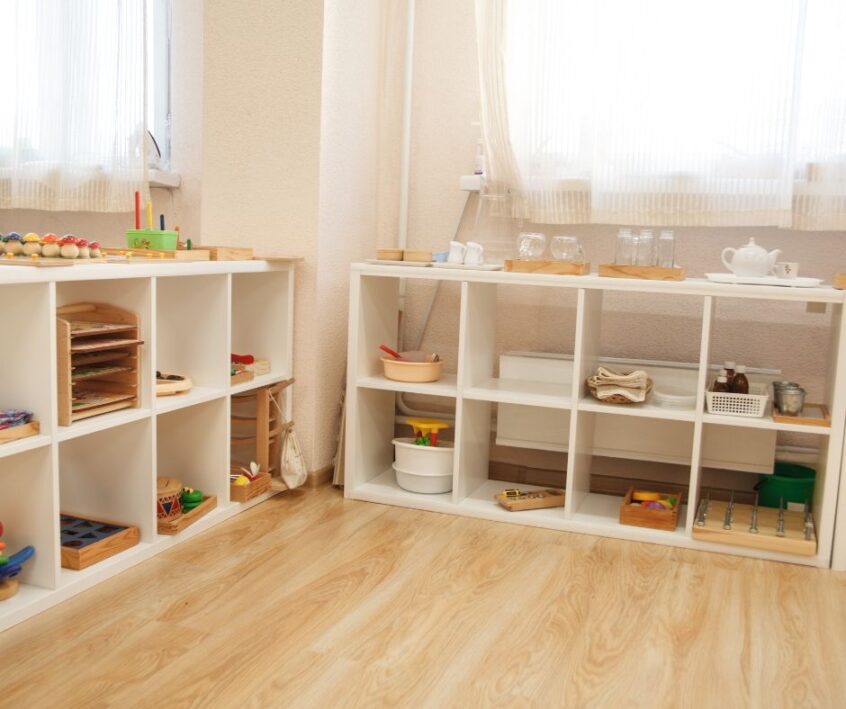
Many parents are curious about Montessori but are unsure what it actually looks like outside of a classroom. Montessori at home does not require special materials or a complete lifestyle overhaul. It is about supporting your child’s natural development by creating an environment that encourages independence, focus, and confidence.
For children ages 3 to 6, small, intentional changes at home can have a meaningful impact. Below are 10 simple ways to bring Montessori principles into your daily life in a realistic and approachable way.
What Is Montessori At Home?
Montessori at home centers around respect for the child, independence, and purposeful activity. When children are given the tools and time to do things for themselves, they develop self confidence, responsibility, and a genuine love of learning.
- Prepare The Environment For Independence
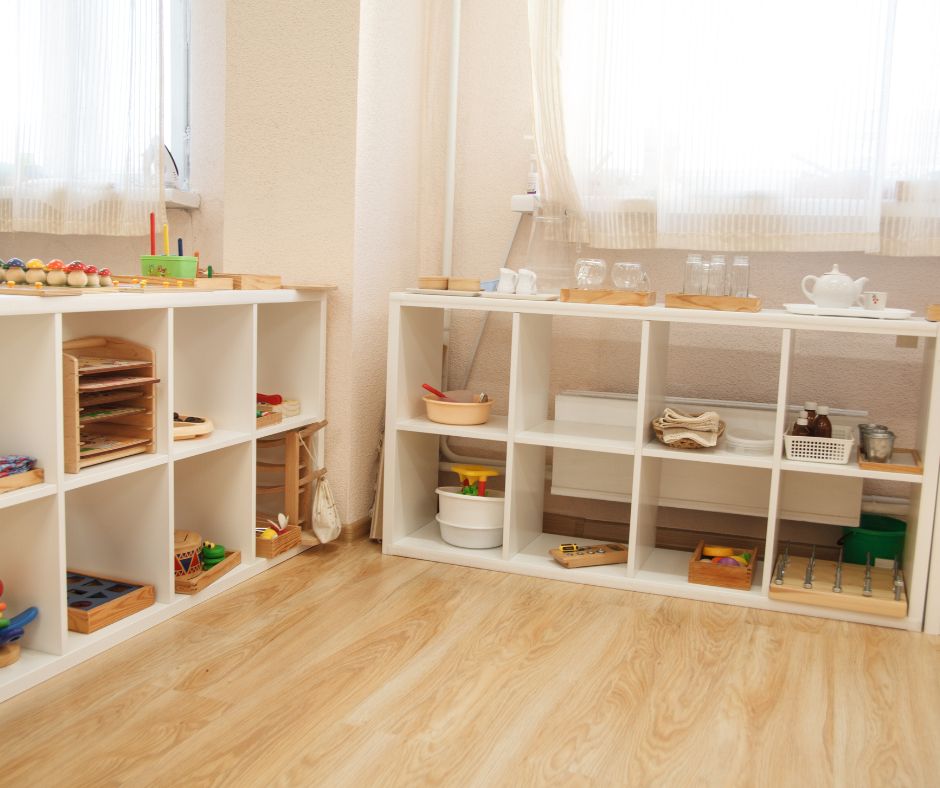
Rather than expecting children to adapt to adult spaces, Montessori encourages adults to adapt the environment to the child. Low shelves, child sized furniture, and accessible materials allow children to move freely and make choices on their own.
When the environment supports independence, children need less correction and feel more capable throughout the day.
- Make Everyday Tasks Child Accessible
Children ages 3 to 6 want to participate in real life. Simple adjustments such as a step stool at the sink, a low hook for jackets, or dishes stored within reach allow children to meet their own needs.
Daily routines become learning opportunities when children are invited to take part.
- Offer Fewer Toys With Clear Purpose
Too many toys can overwhelm young children and lead to scattered play. Montessori environments prioritize quality over quantity.
Choose a small number of activities that encourage hands-on engagement and rotate them regularly. This supports longer periods of concentration and more meaningful play.
- Include Practical Life Activities Daily
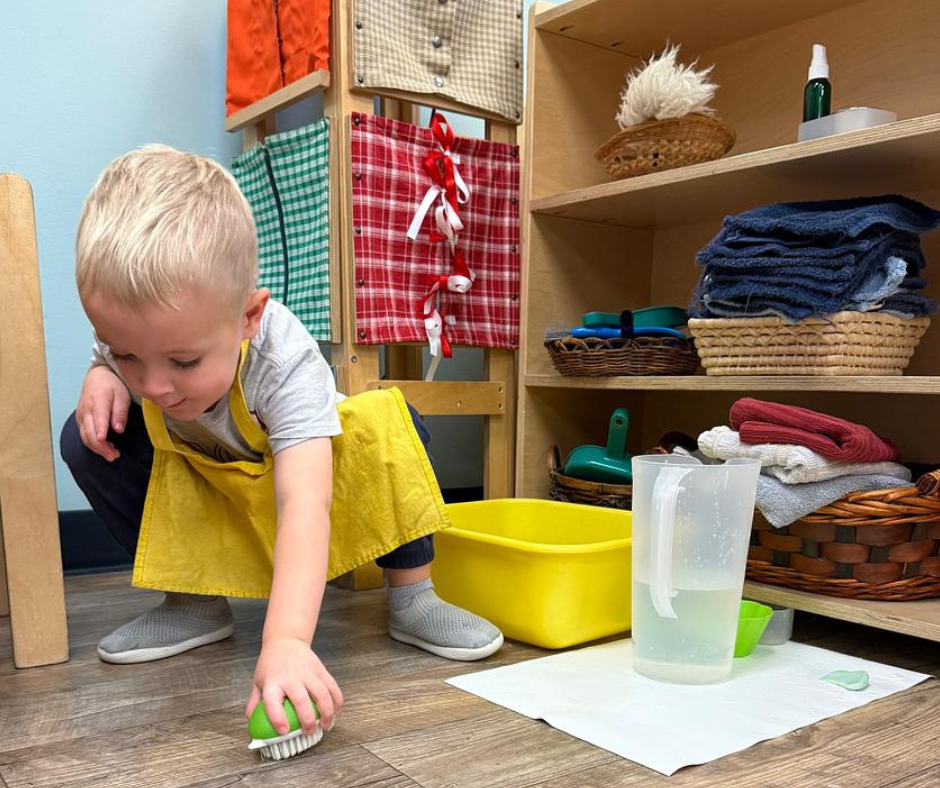
Practical life activities are the foundation of Montessori for Primary age children. Tasks like pouring, sweeping, food preparation, washing dishes, and caring for plants build coordination, focus, and independence.
These activities also help children feel capable and valued within the family.
- Encourage Independence In Self Care
Allow time for your child to dress themselves, brush their teeth, and clean up their space. Choose clothing and tools that support success, such as elastic waistbands or child sized utensils.
Independence takes time and patience, but it builds confidence that carries into all areas of learning.
- Create Clear And Consistent Limits
Montessori supports freedom within boundaries. Children feel safest when expectations are clear, calm, and consistent.
Set limits with simple language and follow through respectfully. This helps children develop self discipline and emotional regulation.
- Protect Your Child’s Concentration
Children ages 3 to 6 are capable of deep focus when given uninterrupted time. Avoid stepping in or redirecting when your child is engaged in meaningful work.
Respecting concentration helps children develop persistence, problem solving skills, and confidence in their abilities.
- Follow Your Child’s Interests
Observation is an important part of Montessori. By slowing down and paying attention to what your child is naturally drawn to, you can better understand how they learn and what they need next. Interests often appear through repeated behaviors such as lining up objects, pretending to write, or carefully pouring and transferring items.
For example, a child who is fascinated by letters might enjoy matching letter sounds to objects around the house or using magnetic letters on the refrigerator. A child who loves movement and order may be drawn to carrying items, sorting toys by category, or helping organize shelves. When children are offered activities that connect to their interests, learning feels meaningful, confidence grows, and joy becomes a natural part of the process.
- Create A Calm And Organized Space
A calm environment supports calm behavior. Keep spaces tidy, materials organized, and visual clutter to a minimum.
An orderly space helps children feel grounded and supports independent work and decision making.
- Treat Your Child As A Capable Individual
At the heart of Montessori is respect. Speak to your child with kindness, listen to their thoughts, and trust their ability to learn through experience.
Mistakes are part of growth. When children feel respected and capable, they rise to the expectations set for them.
Montessori Does Not Have To Be Perfect
Montessori at home is not about doing everything exactly right. It is about making thoughtful choices that support your child’s development during the important years from ages 3 to 6.
Even small changes can help nurture independence, confidence, and a lifelong love of learning.