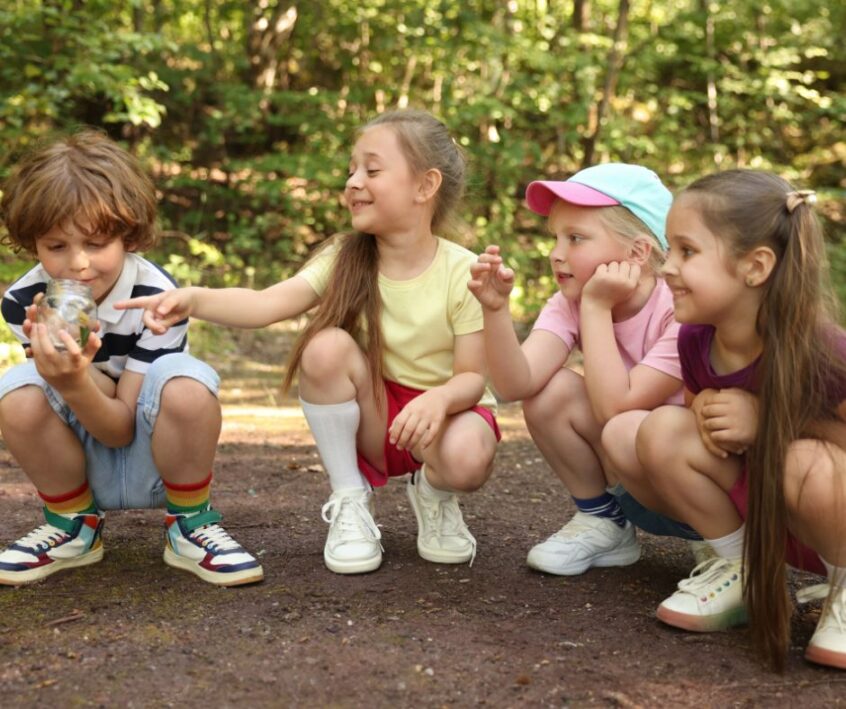
For many families exploring early childhood education, Montessori may feel unfamiliar at first. One of the most noticeable differences is how deeply nature is woven into the learning experience, especially for toddlers and primary age children ages 3–6. In Montessori education, nature is not considered a break from learning. It is an essential part of it.
Dr. Maria Montessori observed that young children develop best when they are connected to the natural world. Nature supports movement, independence, emotional regulation, and meaningful learning in ways that cannot be replicated indoors.
Nature Supports Whole Child Development
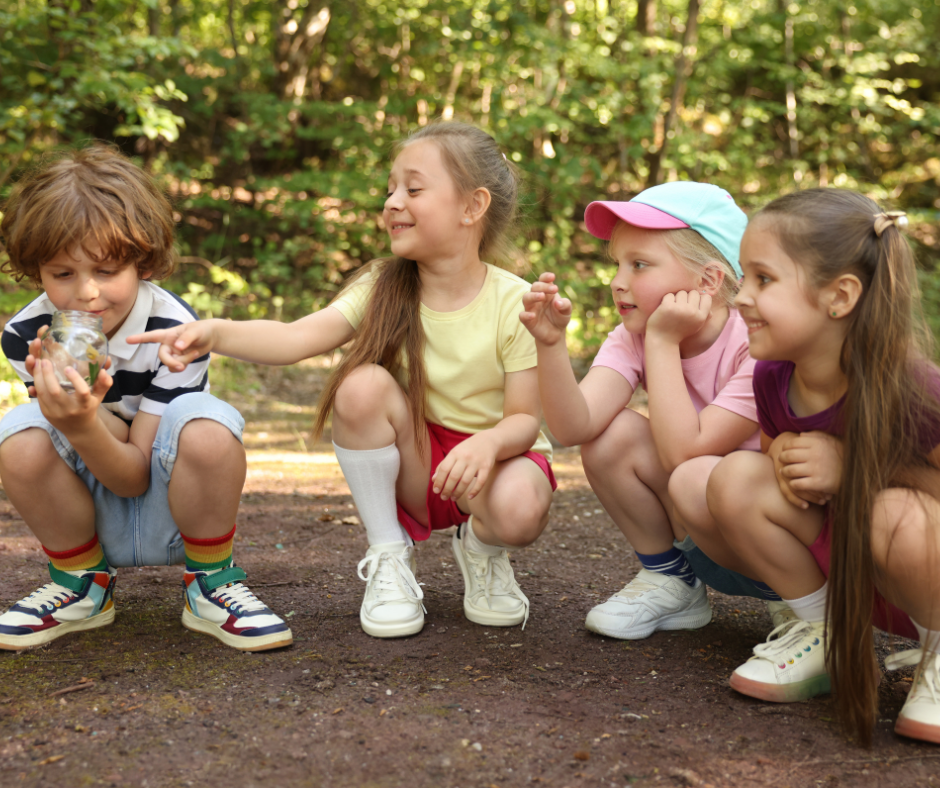
Young children are learning with their entire bodies. They need space to move, explore, and engage their senses. Outdoor environments naturally provide uneven ground, changing weather, textures, sounds, and smells. These experiences help children develop balance, coordination, and body awareness while also strengthening focus and self control.
In Montessori settings, time outdoors is purposeful and unstructured. Children are free to explore at their own pace rather than being directed through activities. This supports confidence and independence from a very young age.
Nature Encourages Independence and Confidence
In Montessori classrooms, children are trusted to do real work. Nature offers endless opportunities for this. Toddlers may practice walking carefully on different surfaces, carrying small objects, or observing insects. Primary age children often take on more responsibility, such as caring for plants, tending gardens, or helping maintain outdoor spaces.
These experiences allow children to see themselves as capable and competent. When children are trusted with real tasks in real environments, their confidence grows naturally.
Nature Calms the Nervous System
For toddlers and young children, emotional development is closely tied to movement and environment. Natural spaces offer room to release energy, slow down, and reset in ways indoor settings often cannot. Montessori education intentionally uses nature as a supportive backdrop for emotional growth, helping children develop calm, focus, and inner balance over time.
Outdoor environments also tend to reduce overstimulation. Natural light, open space, and quiet observation help children reset and find balance. This is especially important for toddlers and preschoolers who are still developing self regulation skills.
Nature Makes Learning Concrete and Meaningful
Children ages 3–6 learn best through hands-on experiences. Nature offers children authentic experiences with early science, math, language, and practical life concepts in a concrete, practical way.
A child counting stones, observing seasonal changes, comparing leaf sizes, or noticing animal tracks is engaging in meaningful academic learning. Montessori classrooms build on these experiences by connecting real world observations to classroom materials and conversations.
Nature Respects the Child’s Natural Curiosity
Montessori education is child led. Instead of adults deciding what a child should focus on, children are encouraged to follow their interests. Nature naturally invites curiosity. A toddler may spend several minutes watching ants move across the ground. A primary age child may ask questions about where birds go in winter or how plants grow.
These moments of curiosity are honored and expanded upon in Montessori environments. Learning happens because the child is interested, not because it is required.
Nature Teaches Care and Responsibility
Montessori education emphasizes respect for the environment and all living things. When children spend time in nature, they develop a sense of responsibility and care.
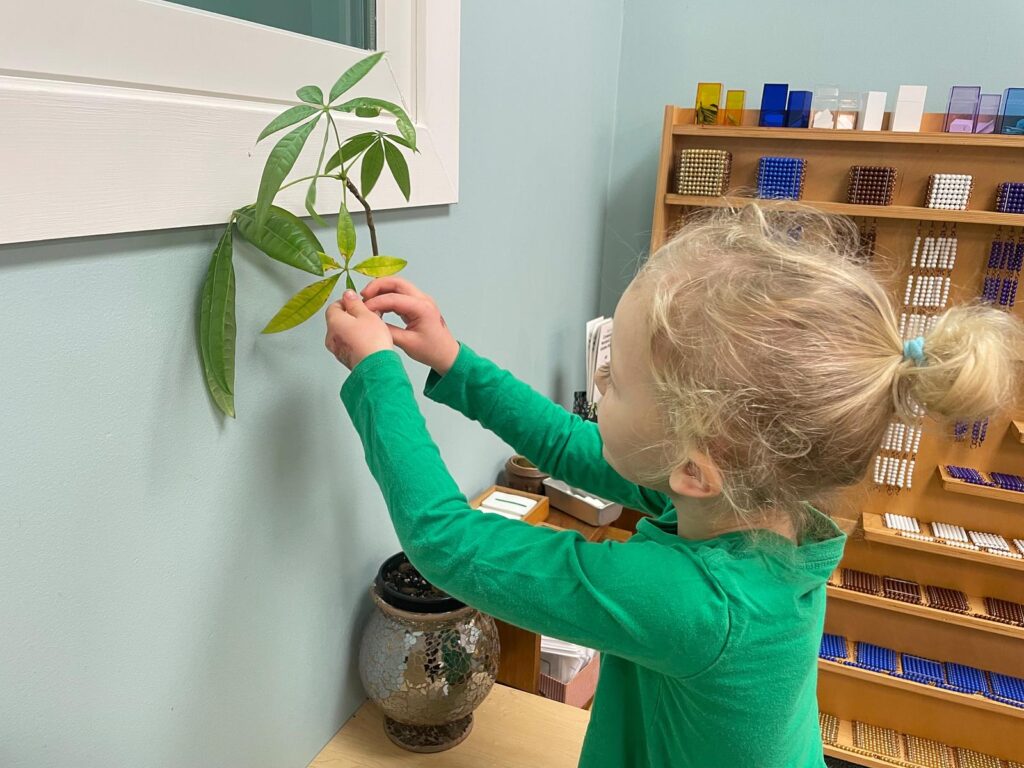
Young children begin by learning to walk gently, observe quietly, and respect plants and animals. Primary-age children take this further by helping care for gardens, outdoor spaces, and classroom plants. These early experiences lay the foundation for empathy and environmental stewardship.
In Montessori education, especially for toddlers and primary age children, nature is essential because it meets children exactly where they are. It supports their development, honors their curiosity, and helps them grow into confident, capable learners.
If you are considering a Montessori school, look for an environment that values connection to nature in meaningful ways. Even without a large outdoor space, Montessori classrooms can thoughtfully bring nature into daily learning through observation, care of plants, natural materials, seasonal studies, and intentional time outdoors when possible. What matters most is the respect for the child’s need to connect with the natural world as part of their learning and development.