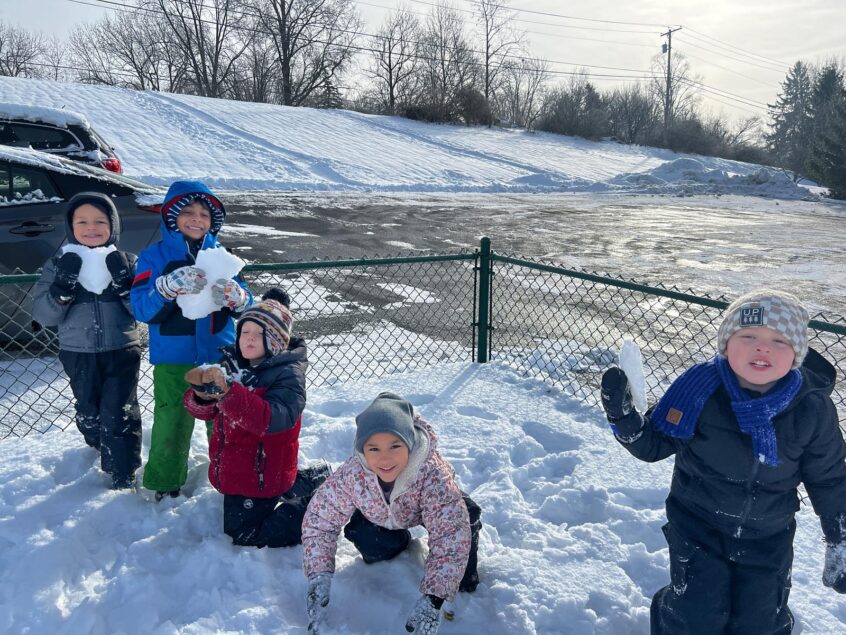
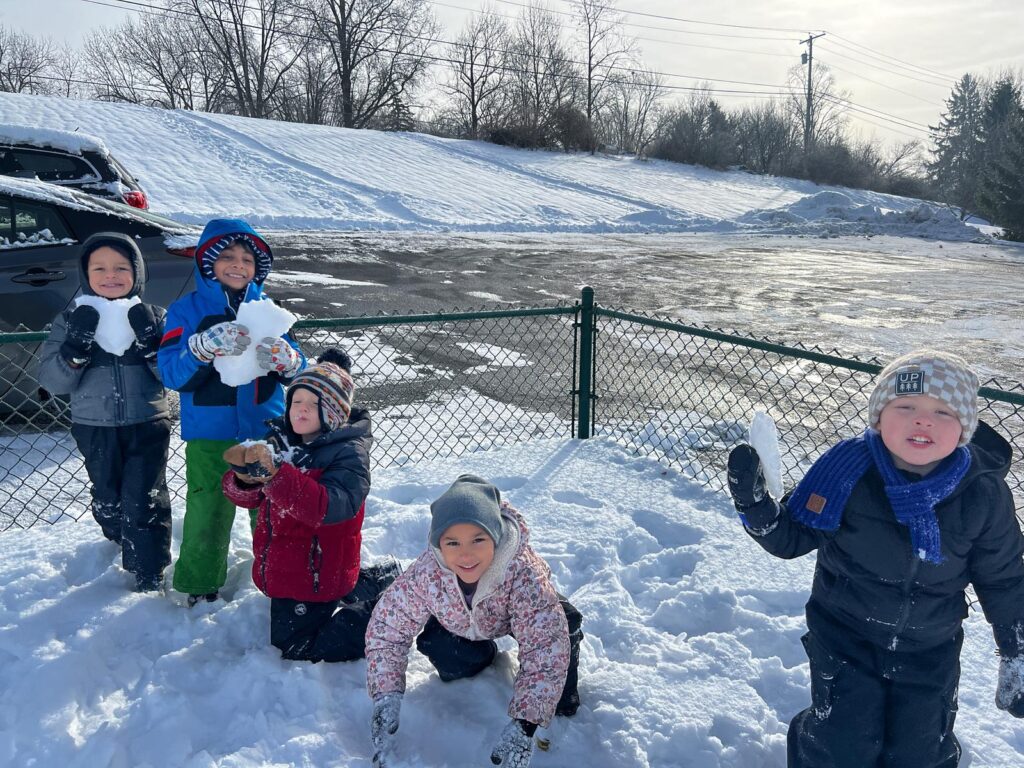
Winter can feel like a season to rush through, but for young children it offers rich opportunities for movement, discovery, and hands-on learning. In Montessori education, outdoor work remains just as valuable in colder months as it is in spring and summer. With the right expectations and simple materials, winter becomes a meaningful extension of the classroom.
We’ve put together a handful of developmentally appropriate outdoor activities for children ages 3–6 that support independence, curiosity, and connection to nature. Each activity includes ideas for simple modifications so families can adapt based on time, space, or resources.
- Snow Observation and Exploration
Invite your child to observe snow as a material rather than treating it only as something to play in. Encourage them to notice how it feels, sounds, and changes.
Children can scoop snow into containers, watch it melt, compare footprints, or observe snowflakes on dark mittens.
-Simple modification
If there is little or no snow, explore frost on the ground, ice on puddles, or even cold soil and leaves. Observation is the goal, not the amount of snow.
- Practical Life Snow Work
Winter offers natural opportunities for purposeful movement and practical life work. Children enjoy contributing in real ways, especially outdoors.
Activities may include shoveling a small area, brushing snow off steps, filling bird feeders, or carrying wood or supplies with supervision.
-Simple modification
If you do not have outdoor chores available, invite your child to help prepare winter gear, brush snow off shoes, or carry items during errands.
- Nature Walks With a Winter Focus
A slow winter walk allows children to notice seasonal changes. Look for bare branches, animal tracks, seed pods, and evergreen plants.
Allow your child to set the pace and choose what captures their interest. You might pause to observe or collect small natural items.
-Simple modification
If time is limited, step outside for just five to ten minutes and focus on one thing, such as listening for winter sounds or finding different textures.
- Building and Constructing With Snow or Natural Materials
Snow can become a construction material, supporting spatial awareness and problem solving. Children may build small structures, stack snow, or experiment with balance.
If snow is unavailable, sticks, pinecones, rocks, and ice chunks can serve similar purposes.
-Simple modification
Construction does not need to be elaborate. Even arranging materials in lines or patterns supports concentration and coordination.
- Winter Art in Nature
Art outdoors invites creativity without the pressure of a finished product. Children may draw in snow with sticks, arrange natural objects, or paint snow with water and food coloring.
This supports fine motor skills and self expression while remaining child-led.
-Simple modification
If supplies are limited, use hands, footprints, or found objects to create designs. The experience matters more than the tools.
- Care of the Environment in Winter
Montessori education emphasizes respect for living things year-round. Winter is an ideal time to care for birds, plants, and outdoor spaces.
Children can help refill feeders, water indoor plants that have been brought inside, or check on outdoor areas together.
-Simple modification
If wildlife care is not possible, talk with your child about how animals survive winter and observe signs of life outdoors.
- Gross Motor Movement in Cold Weather
Young children need daily movement, even in winter. Climbing snowbanks, walking on uneven surfaces, pulling sleds, and balancing on icy free ground all support physical development.
Allow your child to choose how they move and how long they stay active.
-Simple modification
Short bursts of outdoor movement are effective. Even a quick walk, stretch, or balance activity outdoors supports regulation and coordination.
- Reflection and Conversation After Outdoor Work
After returning indoors, invite your child to talk about what they noticed or enjoyed. They may want to draw, build, or recreate their experience.
This reflection supports language development and helps children process their learning.
-Simple modification
If conversation feels rushed, simply acknowledge what you observed your child doing. Validation is often enough.
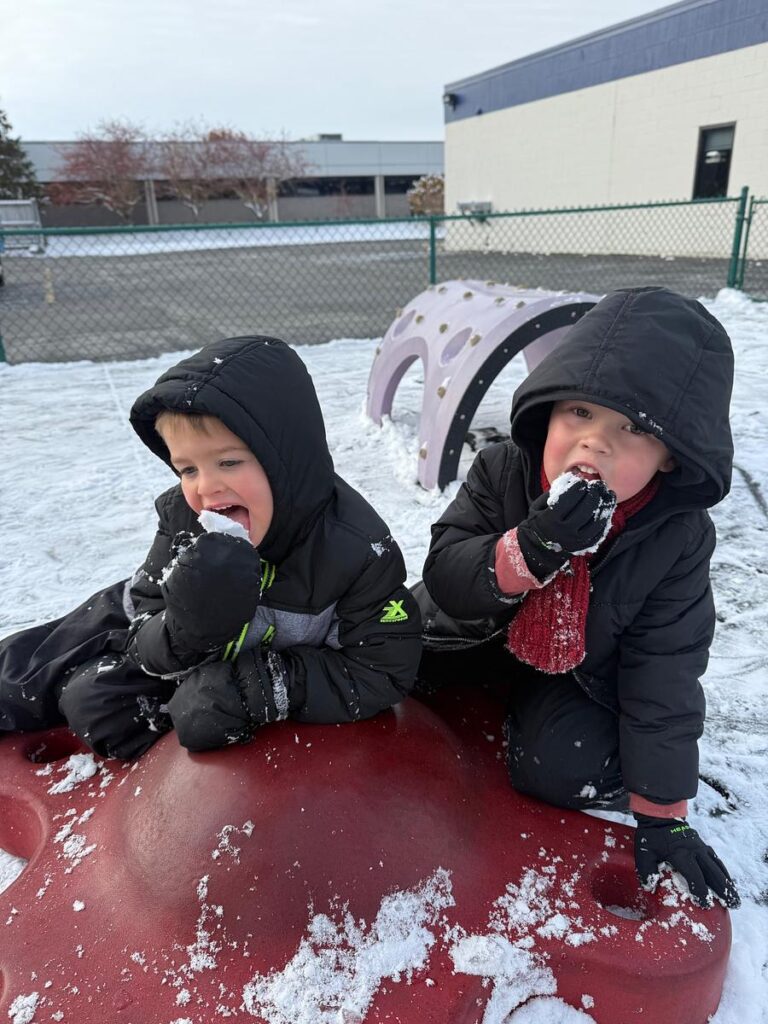
Winter offers children the chance to slow down, observe closely, and engage deeply with their environment. When outdoor experiences remain child led, purposeful, and hands on, winter becomes a season of meaningful growth rather than limitation.
At a Montessori school, outdoor learning continues year round because children learn best through real experiences. With simple preparation and flexibility, families can support this same philosophy at home all winter long.