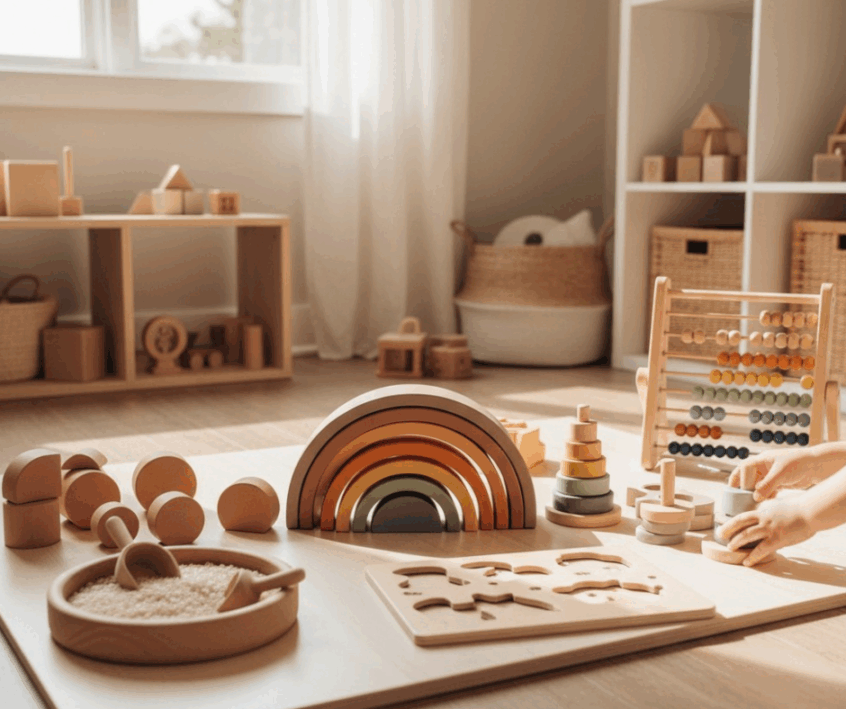
A child’s bedroom is more than just a place to sleep. For children ages 3 to 6, it can be a space that supports independence, responsibility, and confidence. In Montessori education, the environment is carefully prepared to meet a child’s developmental needs. When a space is designed with intention, children are more likely to care for it, use it well, and feel capable within it.
You do not need a perfectly styled room or expensive furniture to create a Montessori-inspired bedroom. Small, thoughtful changes can make a big difference in how your child moves, learns, and grows at home.
We have put together five simple ways to make your child’s bedroom more Montessori for the Primary years. Each idea includes an easy modification so families can adapt based on space, budget, and daily routines.
–
- Low and Accessible Bed
In Montessori, children are encouraged to move independently throughout their day. A low bed or floor bed allows children to get in and out of bed safely without adult assistance.
This supports confidence, body awareness, and responsibility for rest. Children learn to listen to their bodies and manage their own sleep routines over time.
-Simple modification
If a floor bed is not possible, use a low bed frame or place a mattress closer to the ground. The goal is safe, independent access.
2. Child-Sized Clothing and Storage
A Montessori-inspired bedroom makes it easy for children to choose and care for their own clothing. Low drawers, open shelves, and simple hangers allow children to dress themselves and put items away.
Limit choices to a small, organized selection. This reduces overwhelm and supports decision making.
-Simple modification
If furniture is tall, place a few outfits in low baskets or bins. Rotate items weekly to keep options manageable.
3. Simple and Calm Visual Environment
Young children are sensitive to visual clutter. A calm, orderly bedroom supports focus, emotional regulation, and restful sleep.
Choose neutral colors, minimal decorations, and a few meaningful pictures or mirrors at your child’s eye level. Avoid overcrowding walls and shelves.
-Simple modification
Remove excess toys and decorations from view. Store extra items in a closet or bin and rotate them monthly.
4. Dedicated Space for Quiet Work and Reading
Children ages 3 to 6 benefit from having a small area for quiet activities such as reading, puzzles, drawing, or building.
A low table, floor mat, or small shelf with a few carefully chosen materials encourages concentration and independent work.
-Simple modification
Use a small rug and a basket of books or activities if space is limited. Even a corner of the room can become a peaceful work area.
5. Child Responsibility for Care of the Space
In Montessori, children learn to care for their environment. When their bedroom is set up at their level, they can participate in keeping it tidy.
This may include making the bed, placing laundry in a basket, returning toys to shelves, and dusting surfaces. Responsibility builds pride and ownership in the space.
-Simple modification
Start with one small task, such as returning books to a basket each night. Gradually add responsibilities as confidence grows.
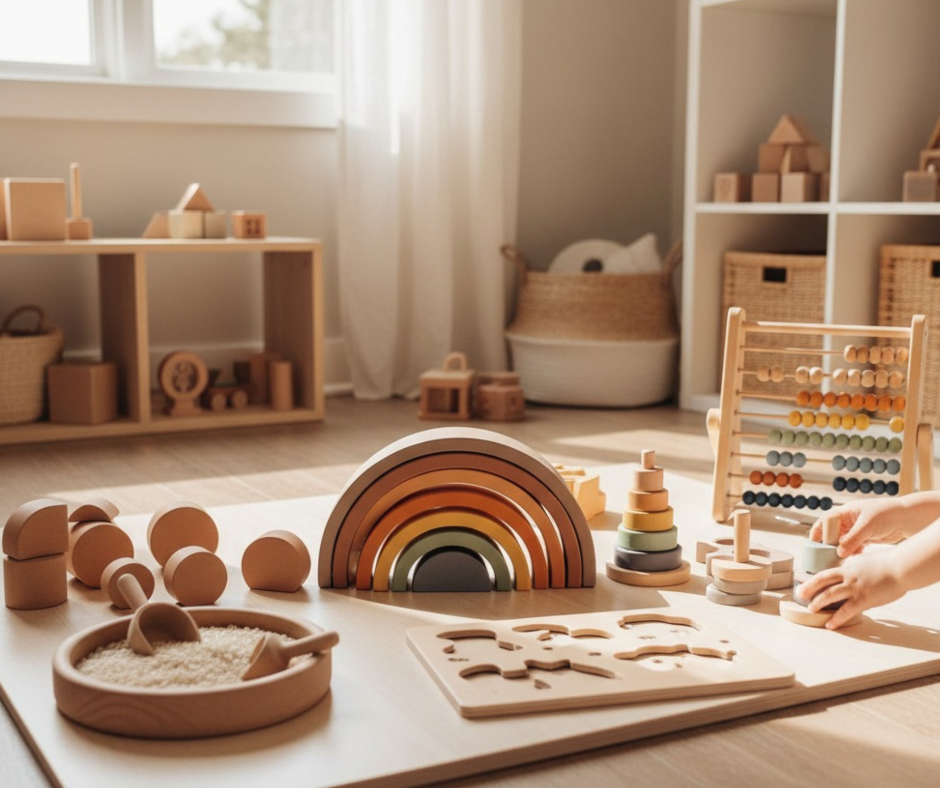
A Montessori-inspired bedroom is not about perfection. It is about creating a space where your child feels capable, respected, and secure.
When children can access their belongings, make choices, and care for their surroundings, they develop skills that extend far beyond their bedroom. These experiences support executive function, independence, and self confidence during the important Primary years.
Was this article helpful? Learn more about implementing Montessori practices at home or finding Montessori-inspired tools for the home!