If you are exploring preschool and kindergarten options for your child, you have likely come across the word Montessori. It is often surrounded by strong opinions, confusion, and a few common myths. For parents of children ages 3 to 6, understanding what Montessori really looks like can make a big difference when choosing the right learning environment.
Let’s take a closer look at the five biggest misconceptions about Montessori education and what actually happens inside a Primary classroom.
Misconception 1: Montessori Is Too Unstructured
One of the most common misunderstandings is that Montessori classrooms are chaotic or lack structure. Because children are free to choose their work, it can appear unorganized to someone unfamiliar with the method.
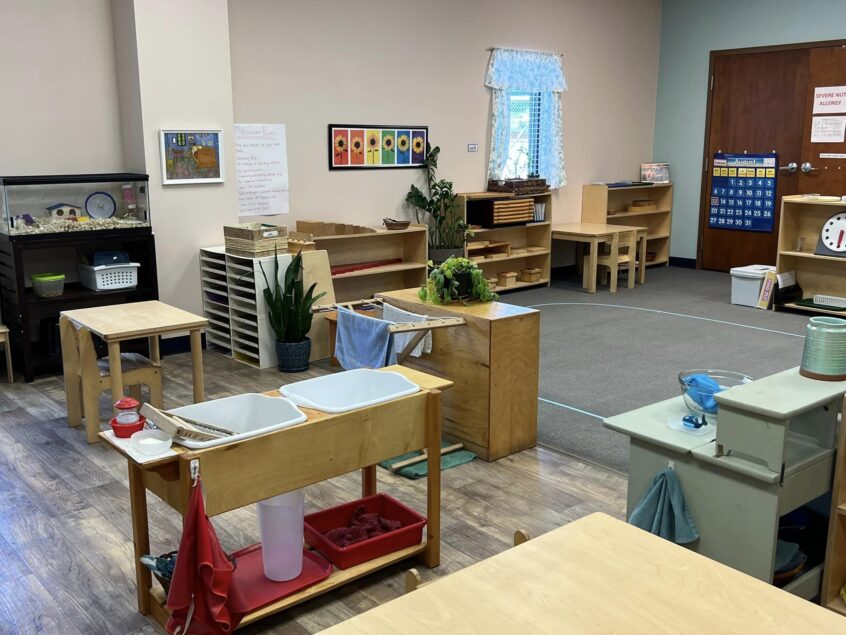
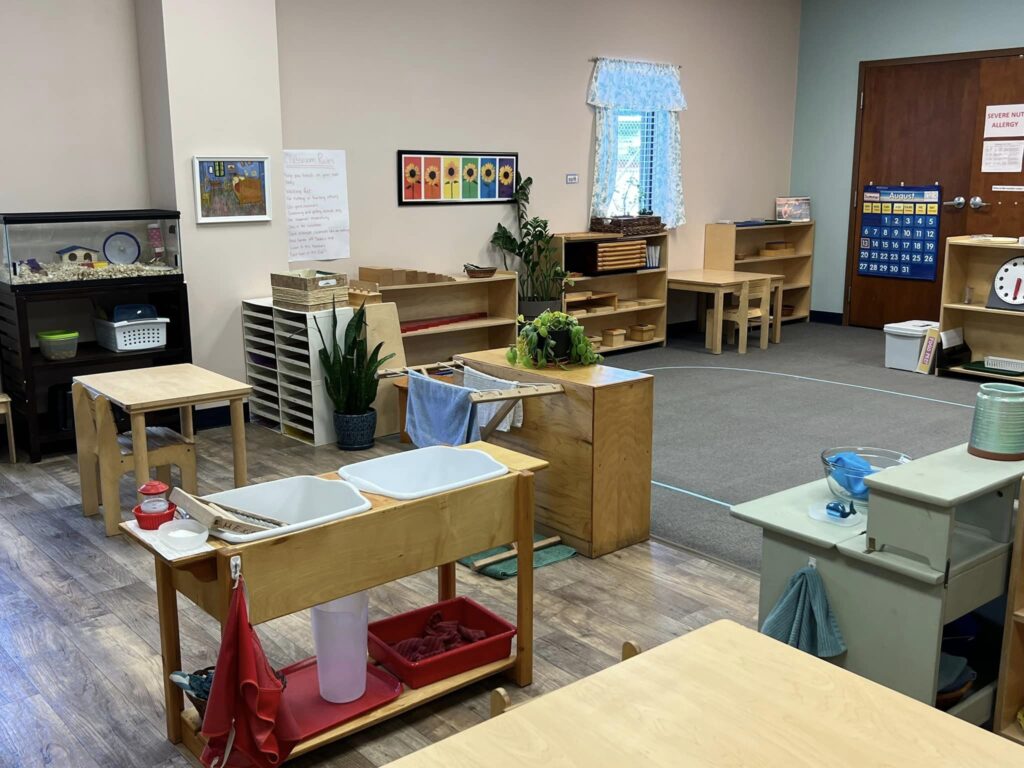
In reality, Montessori classrooms are carefully designed environments with clear routines, expectations, and purpose. Every material has a specific place and learning goal. Teachers guide children in choosing meaningful work and help them develop focus and responsibility.
For children ages 3 to 6, this structure supports independence while providing consistent boundaries that help them feel safe and confident.
Misconception 2: Children Can Do Whatever They Want
Montessori freedom is often mistaken for unlimited choice. Some parents worry that children will avoid challenging work or only choose what feels easy.
In a Primary classroom, freedom comes with responsibility. Children are taught how to select work, care for materials, complete tasks, and return items properly. Teachers closely observe each child and gently guide them toward new challenges when they are ready.
This balance helps young children build self-discipline, motivation, and strong work habits that last well beyond preschool.
Misconception 3: Montessori Does Not Focus on Academics
Another common myth is that Montessori schools focus only on play and social skills, while academics are delayed.
Montessori education for ages 3 to 6 includes a strong foundation in reading, writing, and math. Children work with hands-on materials that make abstract concepts concrete. For example, they use letter sounds to build words, beads to understand quantity, and manipulatives to explore place value.
Because learning is connected to movement and real experience, many children develop strong academic skills naturally and confidently.
Misconception 4: Montessori Is Only for Independent or Advanced Children
Some families believe Montessori is best suited for highly independent or academically advanced children. This can discourage parents whose children are shy, energetic, or still developing self-regulation.
Montessori classrooms are designed to support a wide range of learners. Mixed-age environments allow younger children to learn from older peers, while older children grow through leadership. Teachers meet each child where they are and provide individualized guidance.
For many children ages 3 to 6, Montessori is especially helpful in building confidence, emotional regulation, and social skills.
Misconception 5: Montessori Is the Same as Traditional Preschool
While Montessori and traditional preschool may share some similarities, their approaches are very different.
In traditional settings, learning is often led by whole-group instruction and set schedules. In Montessori classrooms, children work independently or in small groups at their own pace. Materials are designed to be self-correcting, allowing children to learn from mistakes without constant adult intervention.
This approach encourages deeper concentration, problem-solving, and intrinsic motivation from an early age.
What Montessori Really Looks Like for Ages 3 to 6
In a Primary Montessori classroom, you may see children:
-Washing dishes, preparing snacks, or caring for plants (working on developmentally-appropriate practical life skills)
-Working quietly with math and language materials
-Reading with a friend or practicing letter sounds
-Choosing work independently and staying focused
-Helping younger classmates and learning from older peers
These daily experiences help children develop independence, confidence, coordination, and a genuine love of learning.
–
Choosing a school for your young child is a big decision. Misconceptions can make Montessori seem confusing or intimidating, especially if you did not grow up with this style of education. When parents understand how Montessori supports academic growth, social development, and emotional maturity, they are better equipped to see if it aligns with their family values and their child’s needs. For many families, Montessori offers a strong foundation during the critical ages of 3 to 6, when children are forming lifelong attitudes about learning.
The best way to understand Montessori is to observe a classroom, ask questions, and see how children interact with their environment. If you are curious about Montessori education for preschool and kindergarten-aged children in northeast Indiana, you can schedule a tour with Southwest Montessori Academy here.
–