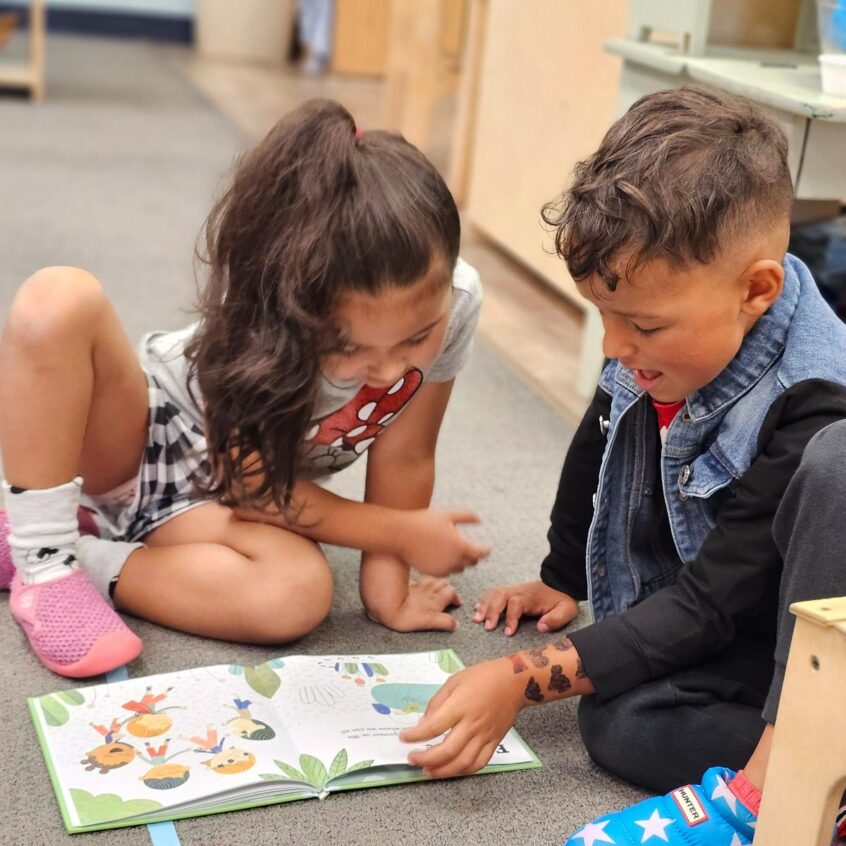
One of the most common questions families ask when considering Montessori education is what happens next. Parents often wonder whether a child who begins their education in a Montessori classroom will be able to adapt to a more traditional school setting later on. This concern is especially common for families of children in the Primary years, ages 3 to 6, and many parents wonder what happens after their child finishes the kindergarten year.
Research and long term outcomes consistently show that a Montessori start to schooling does not hinder a child’s ability to succeed in traditional environments. In fact, it often provides children with skills that help them adapt more easily and perform strongly both academically and socially.
Academic Readiness Beyond Memorization
Montessori education approaches academics differently than traditional schooling, especially in the early years. Rather than focusing on worksheets, grades, or whole group instruction, children learn through hands-on materials that allow them to explore concepts deeply and at their own pace.
A well known study published in the journal Science by researchers from the University of Virginia found that children who attended Montessori programs showed equal or stronger academic outcomes compared to peers in traditional schools, particularly in reading and math. These children also demonstrated greater mastery of concepts, suggesting that learning through concrete materials supports long term understanding rather than short term memorization.
By the time Montessori children transition into traditional classrooms, they often have a strong grasp of foundational academic skills. They may approach learning differently, asking questions and seeking understanding rather than simply completing tasks, but this curiosity and depth of knowledge tends to support long term academic success.
Strong Social and Emotional Foundations
Montessori classrooms place a significant emphasis on social and emotional development, especially during the Primary years. Mixed-age classrooms allow children to experience multiple roles within the community. Younger children learn by observing older peers, while older children develop leadership, empathy, and responsibility.
Research from the Yale Center for Emotional Intelligence highlights the importance of emotional regulation and social awareness in academic success. Montessori environments intentionally support these skills by teaching children how to resolve conflicts, communicate respectfully, and take responsibility for their actions.
When Montessori children move into traditional schools, they bring these social skills with them. While the classroom structure may be different, their ability to work cooperatively, advocate for themselves, and manage emotions often helps them navigate new environments with confidence.
Executive Function and Adaptability
One of the most significant advantages Montessori students gain is the development of executive function skills. Executive function includes abilities such as focus, self-control, planning, and flexibility. These skills are essential for success in any school setting.
Harvard University’s Center on the Developing Child emphasizes that executive function skills developed in early childhood are a stronger predictor of long term academic and life success than early academic achievement alone. Montessori classrooms naturally support these skills through uninterrupted work periods, self-chosen activities, and opportunities for children to manage their time and responsibilities.
As a result, Montessori children often transition well to traditional classrooms that require them to follow schedules, complete assignments, and manage expectations independently. They are accustomed to responsibility and problem solving, which allows them to adapt rather than struggle.
Adjusting to Structural Differences
While Montessori students are well prepared for traditional schooling, transitions still involve adjustment. Traditional classrooms may include desks, teacher led instruction, grading systems, and less freedom of movement. Some children may need time to adapt to these changes.
Educational researchers from Oxford University have noted that children who experience varied learning environments early-on often demonstrate greater cognitive flexibility. Montessori students, who are accustomed to adapting their work based on interest and readiness, tend to adjust well once expectations are clearly communicated.
Parents can support this transition by maintaining consistent routines at home, talking openly about school expectations, and reinforcing that learning looks different in different environments. Emphasizing effort, curiosity, and problem-solving helps children see change as manageable rather than stressful.
A Montessori education during the Primary years is not a detour from traditional success. It is a foundation for it. Children who begin their education in Montessori classrooms develop independence, intrinsic motivation, social awareness, and strong executive function skills. These qualities support not only a smooth transition into traditional schooling, but long term success well beyond it.
Rather than asking whether Montessori children can succeed in traditional schools, research and experience suggest a better question. How does Montessori help children become adaptable, confident learners who are prepared to thrive wherever they go next?
–
The best way to understand Montessori is to observe a classroom, ask questions, and see how children interact with their environment. If you are curious about Montessori education for preschool and kindergarten-aged children in northeast Indiana, you can schedule a tour with Southwest Montessori Academy here.